





Archaeological Sensation · Østerdalen
The Mørstad Hoard: Norway's Largest Viking Age Coin Treasure
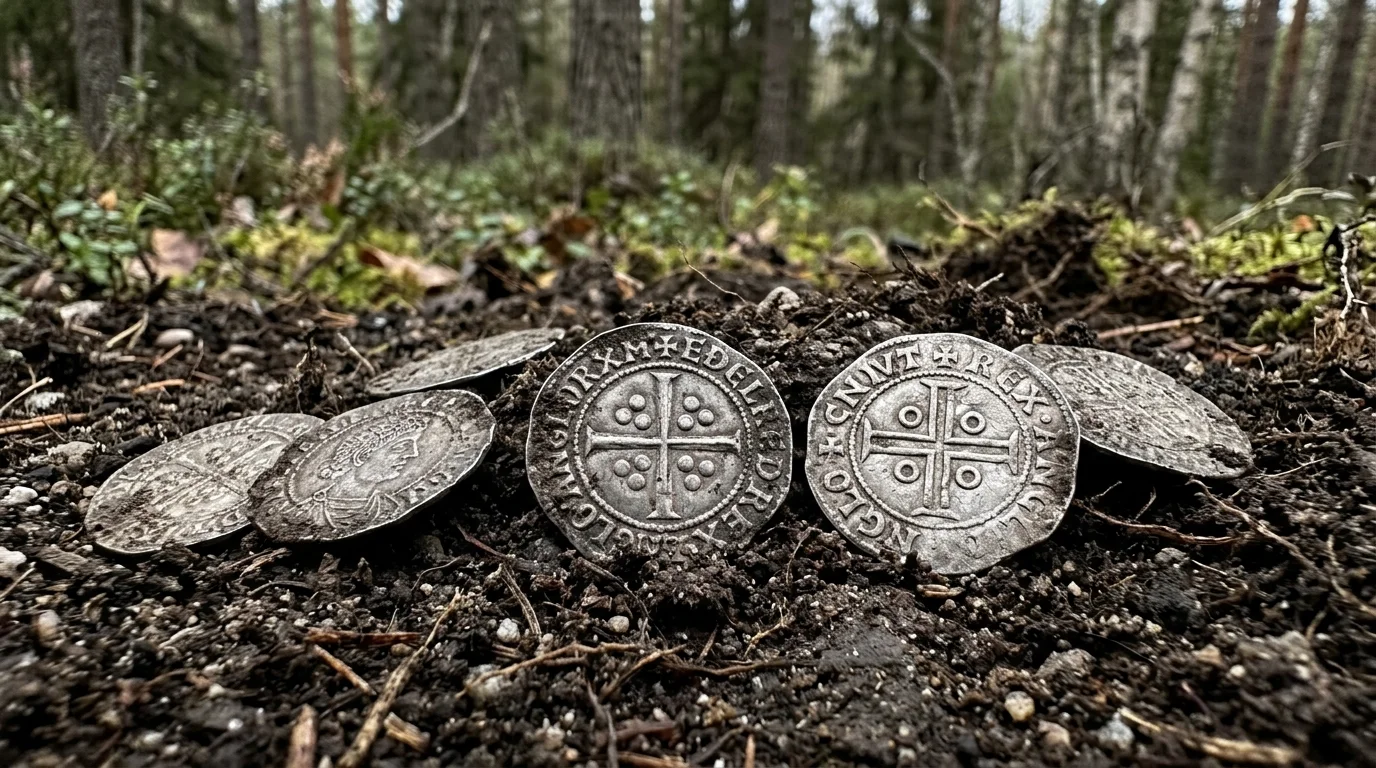
On April 10, 2026, Norwegian archaeological history was rewritten on a quiet farm field near Rena in Åmot municipality, just downstream along the river from Opphus in Østerdalen. Two metal detectorists, Rune Sætre and Vegard Sørlie, were surveying agricultural land at the historic Mørstad farm when their instruments registered unusually powerful signals. After uncovering a cluster of gleaming silver coins just beneath the turf, they realized the profound significance of their find, halted their search immediately, and notified the county archaeologists of Innlandet.
What followed in the ensuing weeks has been described by researchers at the Museum of Cultural History (Kulturhistorisk museum) in Oslo as an unprecedented archaeological sensation. When field counting concluded in summer 2026, archaeologists had recovered at least 4,886 silver coins from the late Viking Age. The Mørstad hoard now stands as the largest Viking Age coin treasure ever discovered in Norway—surpassing the four previously largest Norwegian hoards combined.
Concealed in the Silent Boreal Earth
The silver coins lay surprisingly shallow in the ground, resting only 20 to 30 centimeters beneath the surface within the agricultural plow layer. Following spring harrowing, several coins were even partially exposed on the field’s surface. Ground-penetrating radar surveys conducted across the surrounding area revealed no subsurface structures, postholes, or burials.
Archaeologists concluded that the treasure was intentionally buried in haste, likely wrapped in a leather pouch or cloth container that decomposed over nine centuries in the acidic boreal soil. Its owner—whether a regional chieftain, a wealthy Norse merchant, or an elite warrior returning from abroad—never returned to retrieve it. For nearly a millennium, successive generations of farmers plowed the earth above, slowly dispersing the coins across a localized perimeter while the secret remained undisturbed until 2026.
The Global Currency of the Viking World
The state of preservation has stunned numismatists at the University of Oslo’s Coin Cabinet. Preserved within the sandy silts of the Rena river valley, many coins retain sharp reliefs, legible legends, and an almost freshly minted silver luster.
According to Professor Svein Harald Gullbekk, a leading numismatic authority at the Museum of Cultural History, the hoard encompasses a rich international assemblage:
- Anglo-Saxon Silver Pennies: Coins struck under kings such as Æthelred the Unready and Cnut the Great, acquired through extensive North Sea maritime trade or extracted as Danegeld tribute payments.
- German Silver Deniers & Pfennigs: Predominantly Otto-Adelheid pennies from the Holy Roman Empire, representing the international reserve currency of the late Viking world—the “euro or dollar” of 11th-century Northern Europe.
- Rare Norwegian Royal Coinage: Most remarkably, the hoard contains early native Norwegian issues, including four exceedingly rare coins minted under King Harald Hardrada around 1046–1047.
The presence of the Hardrada coins securely anchors the deposition date to the mid-1040s—a pivotal historical epoch when the Viking Age was transitioning into the early Christian medieval kingdom, shortly after Harald returned to Norway with vast Mediterranean treasures accumulated in the Byzantine Varangian Guard to claim the Norwegian crown.
Østerdalen’s Forgotten Corridor of Power
The discovery of the Mørstad treasure permanently reshapes the historical understanding of Østerdalen during the Viking Age. In modern popular memory, the eastern interior has frequently been viewed as remote forest hinterland, overshadowed by the agricultural power centers of the Oslofjord and Lake Mjøsa. The Mørstad hoard demonstrates the contrary:
The confluence of the Glomma and Rena rivers formed a vital strategic junction along Norway’s inland highway. Down this valley traveled iron smelted from bog ore, premium pelts, elk horn, and highland timber toward southern ports and the Kattegat, while luxury goods, precious bullion, and political emissaries navigated northward toward Trøndelag and the sacred shrine of Nidaros.
Burying a fortune of this scale—worth multiple farmsteads, ocean-going ships, or an entire retinue of armed warriors—confirms that leading figures of the late Viking world held deep interests along the Glomma. Today, the find is protected under the Cultural Heritage Act, while ongoing research at the Coin Cabinet in Oslo continues to illuminate the economic life of Norway’s Viking frontiers.
Questions about The Mørstad Hoard: Norway's Largest Viking Age Coin Treasure?
Tell us what you are looking for or when you wish to arrive. We are happy to advise and assist.
Write to Ophuz