


Boreal Forest · Norwegian-Russian History
The Scandinavian and Russian Taiga: Europe’s Green Lung and Norway’s Historical Ties to Russia
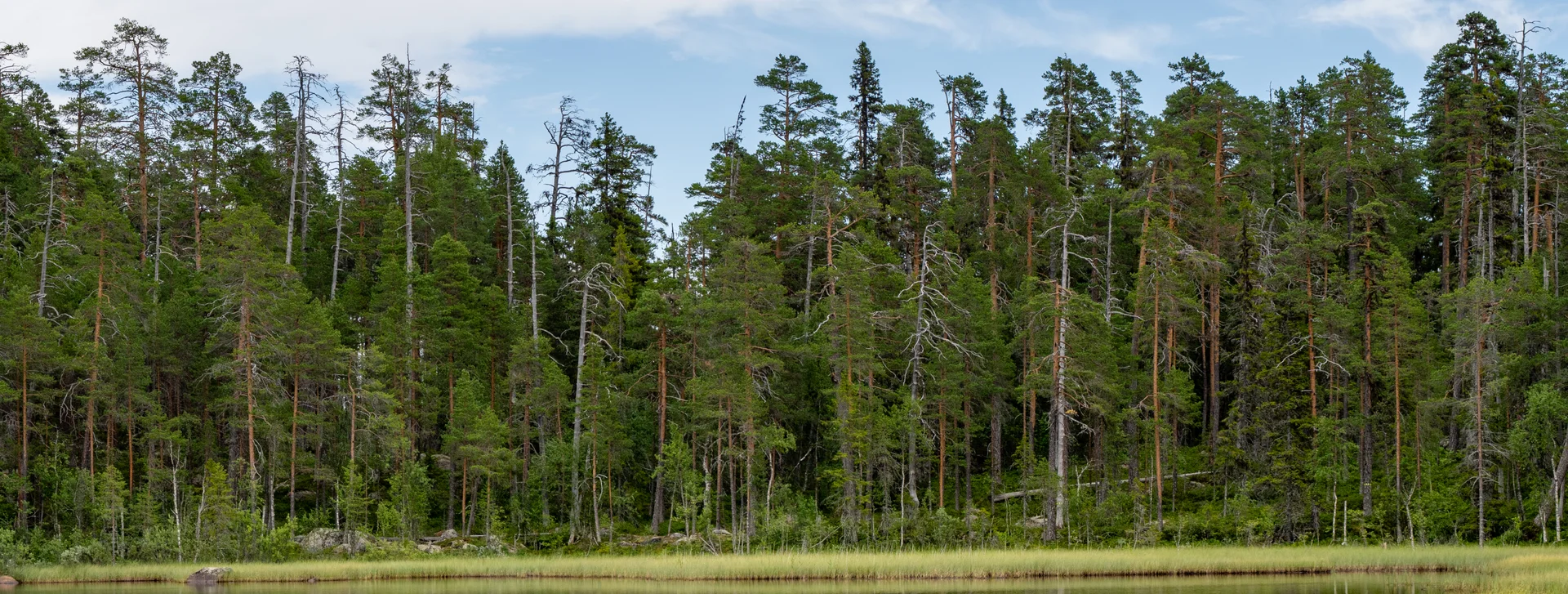
From the weathered, lichen-draped Scots pines of Femundsmarka and the dense spruce forests flanking the Glomma River in Østerdalen, across Sweden and Finland all the way to the western foothills of the Ural Mountains, an unbroken expanse of coniferous canopy blankets the high north.
This is the Scandinavian and Russian taiga — the largest terrestrial ecoregion in Europe. Spanning more than 2.15 million square kilometres (over 830,000 square miles), this sweeping boreal biome represents not only the continent’s most vital ecological lung, but also a shared geographical canvas that has intertwined the destinies, trade, and cultures of Norway and Russia for well over a millennium.
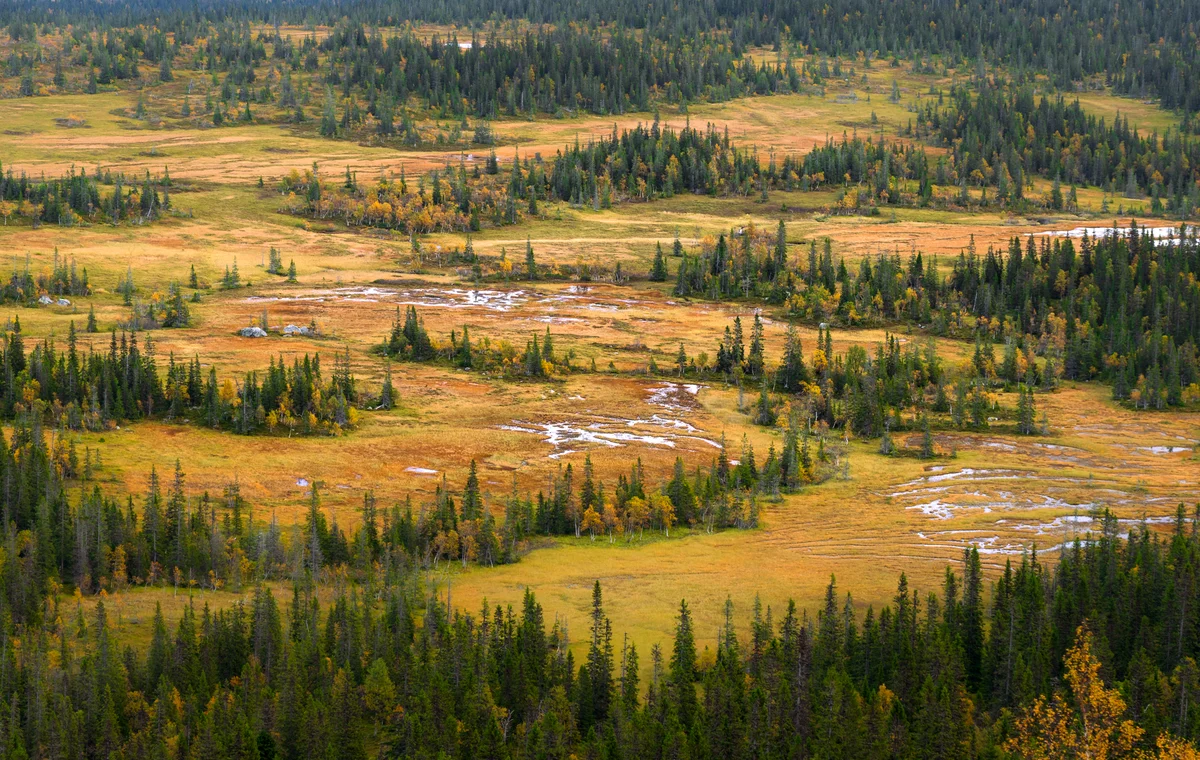
Europe’s Grandest Ecoregion: Pine Barrens, Bogs, and Ancient Woods
Geobotanically, the Scandinavian and Russian taiga belongs to the Circumboreal Region of the Holarctic Kingdom. The landscape is governed by two hardy conifers exquisitely adapted to the demanding subarctic climate:
- Scots Pine (Pinus sylvestris): Monarch of the drier sandy outwash plains, glacial moraines, and nutrient-poor peat margins. Highly fire-tolerant, these pines can endure for centuries; weathered silver snags (kelo or tørrgadd) stand as ancient monuments in the pristine wilderness.
- Norway Spruce (Picea abies): Dominating moist, nutrient-rich depressions and sheltered valley floors, creating dense, moss-carpeted, cathedral-like woodland. Toward the eastern fringes near the White Sea and the Urals, it blends with Siberian spruce (Picea obovata) and Siberian larch (Larix sibirica).
Deciduous pioneers such as silver birch, Eurasian aspen, gray alder, and goat willow soften the evergreen canopy along riparian zones, lakeshores, and post-fire clearings.
One of the defining hallmarks of this boreal ecoregion is its extraordinary abundance of freshwater. Countless labyrinthine lakes, river systems, and vast peat mires interlace the forest. In ecological literature, Norway’s Femundsmarka National Park is celebrated internationally as a quintessential archetype of this rugged taiga wilderness, where boulder fields, ancient pines, and pristine glacial waterways evoke the very heart of the Karelian and Russian taiga.
Biodiversity of the Boreal Realm
Despite acidic podzol soils and prolonged, bone-chilling winters, the taiga shelters some of Europe’s most emblematic wildlife.
The continent’s great carnivores — the brown bear, gray wolf, wolverine, and Eurasian lynx — rely on these vast, continuous tracts of forest for their genetic survival. The Eurasian elk (moose) reigns as the undisputed giant of the woodland, while forest reindeer browse along the transitional zones between peat bog and alpine tundra.
For avian species, the boreal old-growth stands and mires are sanctuaries of global significance:
- Western Capercaillie (Tetrao urogallus): The grand grouse of the north, utterly reliant on ancient pine needles and quiet winter canopies for shelter.
- Siberian Jay (Perisoreus infaustus): The fearless taiga nomad that faithfully trails backcountry hikers through old-growth timber.
- Nocturnal Predators: The great grey owl, Northern hawk-owl, and Ural owl sweep across forest clearings in search of voles and lemmings.
- Wetland Avians: Taiga mires provide indispensable breeding grounds for vulnerable species such as the lesser white-fronted goose and great snipe during their spring migrations.
Viking-Age Gardariki: The Earliest Dynastic Ties
The great boreal forest was never an impenetrable barricade; rather, its river networks served as the supreme highways of the early medieval world. To Norse seafarers and traders, the vast eastern taiga was known as Gardariki (Garðaríki — “the realm of strongholds”), centered around the prosperous river hubs of Novgorod (Holmgard) and Kyiv along the great waterways to Byzantium.
Norway’s foundational kings maintained deep, intimate, and formative connections with this eastern realm:
- Olaf Tryggvason: Raised in exile at the royal court of Grand Prince Vladimir the Great in Novgorod after being ransomed from slavery in the eastern Baltic.
- Saint Olaf (Olav Haraldsson): When driven from Norway in 1028, Olaf sought refuge in Gardariki with Grand Prince Yaroslav the Wise and his Swedish-born consort, Princess Ingegerd. Olaf’s young son, Magnus the Good, was fostered in Novgorod before returning to claim the Norwegian crown.
- Harald Hardrada (Harald Hardråde): Commanded Yaroslav’s armed forces in the east, amassing legendary wealth through campaigns before returning home to claim Norway’s throne and wedding Yaroslav’s daughter, Princess Elisiv of Kyiv (Elisaveta), who reigned as Queen of Norway.
These dynastic marriages, military brotherhoods, and royal fosterings fused early Scandinavian kingship directly to the Slavic trading courts of the eastern taiga.
The Northern Borderland and the Shared Commons
In the far north, Norway and Russia meet within a unique frontier outpost of the taiga. In the Pasvik Valley, a western salient of the vast Siberian taiga thrusts deep into Norwegian territory, welcoming eastern species such as the Siberian spruce, the muskrat, and distinctive eastern birds like the pine grosbeak and Siberian tit.
For centuries, no militarized border cut through this northern boreal wilderness. The vast territory between Neiden, Pasvik, and Pechenga functioned as a shared common district (fellesdistrikt), inhabited by the indigenous Skolt Sámi, who paid tribute to both the King of Norway and the Tsar of Russia.
The Skolt Sámi embraced Russian Orthodox Christianity in the 16th century, and the diminutive St. George’s Chapel in Neiden (erected in 1565 by Saint Tryphon of Pechenga) remains an active cultural sanctuary attesting to this shared spiritual and geographic borderland.
It was not until the Border Convention of 1826 that the 196-kilometer (122-mile) boundary was formally demarcated — establishing Norway’s youngest and historically most stable land frontier, which has never witnessed an armed border war between the two nations.
The Pomor Trade: Rye Flour, Salted Fish, and «Russenorsk»
From the mid-18th century until the Russian Revolution of 1917, the northern rim of the taiga fostered one of the most vibrant barter economies in maritime history: the Pomor trade.
The Pomors were Russian seafaring peasants and merchants from the White Sea coast and Arkhangelsk Governorate. Every summer, as Arctic ice receded, the Pomors embarked in their two-masted vessels (lodyas), sailing westward past the Kola Peninsula into the fjords of Finnmark, Troms, and Lofoten.
The trade was built on symbiotic economic necessity:
- The Russians brought rye flour, oatmeal, tar, hemp, birch bark, timber, and canvas produced in the Russian interior and taiga.
- The Norwegians supplied fresh and salted fish — especially saithe (pollock), cod, and halibut.
For the isolated communities of Northern Norway, the Pomor trade was a lifeline of existential proportion. During the British naval grain blockades of the Napoleonic Wars (1807–1814), Russian rye flour rescued thousands of coastal families from devastating famine.
This close intercultural camaraderie even gave rise to a unique pidgin language: Russenorsk (colloquially called Moja på tvoja — “mine in your way”). Comprising roughly 400 words synthesized from Norwegian, Russian, English, and Dutch, this maritime pidgin enabled fishermen and merchants to barter, haggle, and celebrate together across harbor quays every summer season.
From Timber Floating to Modern Stewardship: The Green Belt
Throughout the 19th and 20th centuries, the vast spruce and pine forests of the taiga fueled modern industrialization. In Norwegian river valleys like Østerdalen, as well as across Northwest Russia, timber floating along waterways formed the economic backbone of communities, exporting raw timber to build Europe’s cities, mines, and fleets.
Today, the taiga has assumed a vital new global role: as immense carbon sinks and frontline biodiversity sanctuaries. The international Fennoscandian Green Belt, linking protected areas along the Norwegian, Finnish, and Russian borders, bridges Norway’s Øvre Pasvik National Park and Russia’s Pasvik Zapovednik into an interconnected ecological corridor.
Whether standing beneath the ancient pines of Femundsmarka or watching the mist lift from the Glomma, one stands at the threshold of this titanic boreal world. The Scandinavian and Russian taiga is far more than an ecoregion of wood and stone — it is a living historical bridge woven from a thousand years of shared wilderness, trade routes, and northern kinship.
Questions about The Scandinavian and Russian Taiga: Europe’s Green Lung and Norway’s Historical Ties to Russia?
Tell us what you are looking for or when you wish to arrive. We are happy to advise and assist.
Write to Ophuz