






Norse Mythology · Flateyjarbók
The Discovery of Norway: The Myth of King Nor and the Realm’s Origins
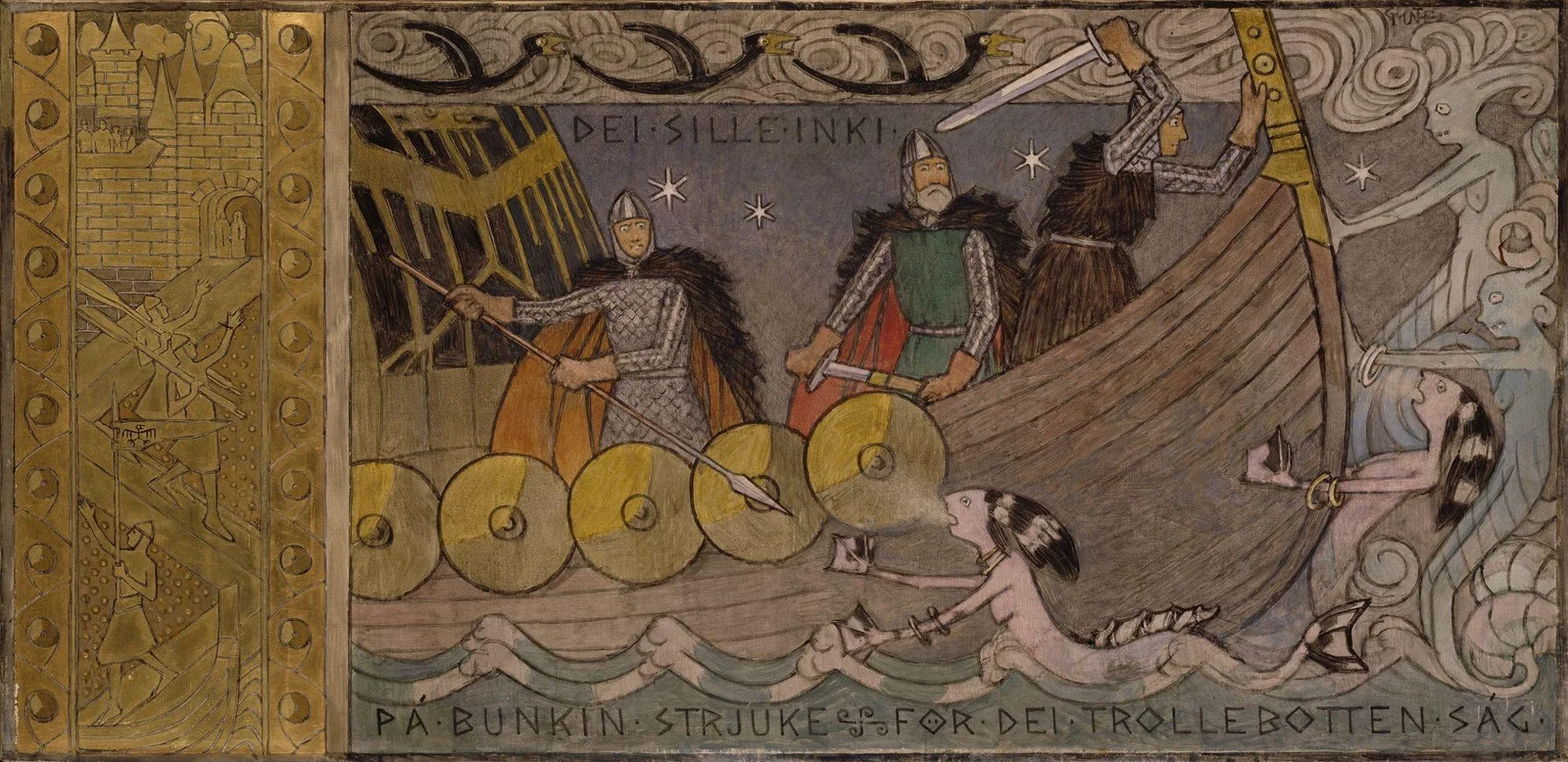
Where does the name Norway originate, and how did medieval Scandinavians imagine their northern realm was first created? Long before the dawn of modern historiography and archaeology, a vivid oral and literary tradition wove primal forces, frost giants, and warrior-kings into a spellbinding national origin myth.
In the monumental 14th-century Icelandic manuscript Flateyjarbók (Codex Flateyensis, GKS 1005 fol.), two closely related legendary saga texts have been preserved: Hversu Noregr byggðist (“How Norway Was Inhabited”) and Fundinn Nóregr (“Norway Found”, which serves as the opening prologue to Orkneyinga saga). Together, these accounts form the core of the legendary cycle of King Fornjót and his kin — widely known as The Discovery of Norway.
In this epic tale, natural elements and seasonal cycles are personified as primordial giants, culminating when the legendary founder-king Nor (Nórr) straps on his skis to claim the mountains, lakes, and fjords from the frozen Arctic heights to the western sea.
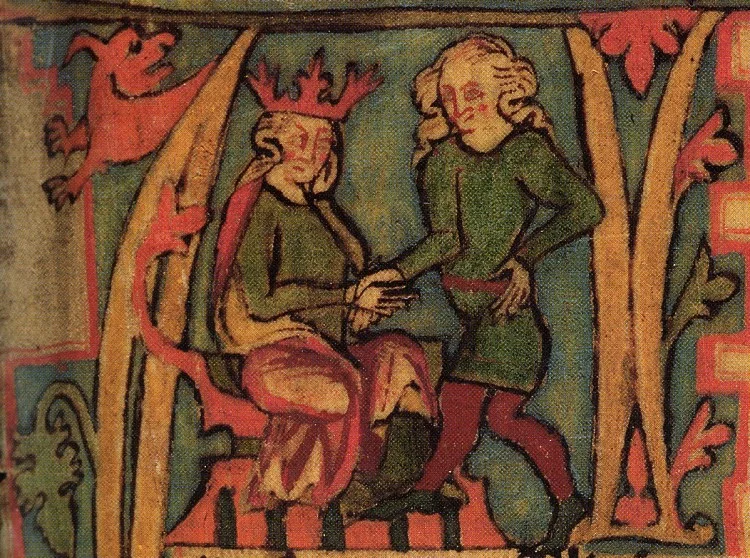
Fornjót and the Primordial Elemental Forces
The saga opens in the far north and east, in a mystic realm shrouded in ice and winter mist:
“There was a king named Fornjót. He ruled over Jötland, which is called Finland and Kvenland. It lies east of the sea gulf that reaches toward Gandvík, which we call the Gulf of Bothnia.”
In Old Norse tradition, Fornjót was an ancient giant-king whose name suggests an “ancient destroyer” or “primordial jotun”. He fathered three sons who personified the three fundamental physical forces of the Nordic cosmos:
- Hlér (also identified with Ægir), ruler of the ocean and the surging tides.
- Logi (blaze or flame), ruler of wild fire.
- Kári, ruler of the winds, storms, and freezing gales.
Through Kári, the saga charts the personification of Nordic winter: Kári was the father of Frosti (frost), who in turn fathered Snær the Old (Snærr inn gamli, snow personified). Snær fathered Thorri (Þorri), the embodiment of the bitter midwinter freeze.
Thorri was a renowned sacrificial priest and held an annual midwinter blót known as Thorrablót (Þorrablót). It is from this legendary king that the midwinter month of Thorri (mid-January to mid-February) took its name — a heritage preserved to this day in traditional Icelandic culture.
The Disappearance of Gói and the Sacred Oath
King Thorri had two sons, Nor (Nórr) and Gor (Górr), and a daughter named Gói. During one fateful midwinter Thorrablót, the unthinkable occurred: Gói vanished without a trace into the freezing darkness.
Desperate searches yielded nothing. When the month drew to a close, Thorri instituted a second sacrifice to petition the gods for news of his daughter’s fate. This sacrifice was named Góiblót, lending its name to the early spring month of Gói (mid-February to mid-March). Yet the portents remained silent.
Three winters later, the two brothers could endure the silence no longer. Nor and Gor swore a sacred oath on their blades: they would scour every corner of the North until their sister was found. They divided their quest between sea and land:
- Gor, the sea king, took to his dragon-prowed ships to search the outer skerries, islands, and open sea lanes.
- Nor, the inland ruler, resolved to traverse the snowy mountain passes and unexplored valleys on foot and ski.
Gor steered his ships through the Gulf of Bothnia, searched the Swedish archipelagos, explored the Baltic isles, and sailed south to Denmark, where he visited kin descended from their ancestor Hlér on Læsø (Hlesey). Yet across all his seafaring travels, no word of Gói reached him.
Nor’s Legendary Ski March Across the Kjølen Ridge
Nor adopted a completely different strategy. He patiently waited until the autumn frost hardened the ground and fresh snow blanketed the moorlands, ensuring good skiing conditions.
Accompanied by a disciplined warband on skis, Nor marched west from Kvenland along the northern curve of the gulf toward Finnmark. When indigenous inhabitants sought to bar their way, the saga recounts that a terrifying sorcery and martial fury accompanied Nor’s hosts: the mere sound of their war cries and the flash of their swinging blades threw their foes into disarray.
Nor and his men then ascended the fearsome mountain range of Kjølen — the spine dividing modern Norway and Sweden. Surviving on wild game and arctic birds, they pressed westward through untracked wilderness until they noticed the rivers turning to flow downward toward the west, into an unknown sea.
Following the tumbling mountain torrents down through steep canyons, they suddenly emerged onto the shores of a vast, fertile fjord lined with settlements. Nor defeated the local chieftains who offered battle and claimed the territory for his own. This magnificent fjord, the saga reveals, was Trondheimsfjorden (Trøndelag).
From Trondheim to Sogn and Nordfjord
Nor spent the summer consolidating his rule around the fjord, but as autumn frost returned to the heights, he renewed his campaign southwards. Sending a contingent along the coast toward Møre, Nor led his main host up the river valleys, across Dovrefjell, and south through Gudbrandsdalen until he beheld the great inland lake Mjøsa (Mjörs).
There, swift messengers arrived with grave tidings: Nor’s vanguard along the western coast had suffered a stinging defeat against a fierce coastal king named Sokne (Sókni).
Nor wheeled his army westward across the alpine heights, through Valdres, and plunged down to the shores of a narrow, precipitous chasm of water: the majestic Sognefjord. There, King Nor and King Sokne clashed in a furious engagement. Sokne was undaunted by Nor’s magical aura, and the two kings traded bone-crushing blows in single combat. Nor emerged victorious, slaying Sokne on the shore; to this day, the surrounding district of Soknedal bears the fallen ruler’s name.
Nor pushed north into the inlet known ever since as Nordfjord. And there, a joyous spectacle unfolded: King Gor came sailing into the fjord with his naval squadron from the southern coast. The brothers embraced in triumph. Neither had yet discovered Gói’s fate, but together they had conquered an entire subcontinent.
Dividing the Realm and the Birth of «Norvegr»
Sitting together upon the shores of Nordfjord, Nor and Gor formulated a celebrated partition agreement that would become a legendary touchstone in Old Norse maritime law:
- Gor received all the islands and skerries between which a ship with a fixed rudder could navigate.
- Nor was awarded all the vast mainland, with its valleys, crags, forests, and alpine plateaus.
In honor of his conquest, Nor named his new mainland dominion Norvegr — literally “Nor’s Way” or “Nor’s Realm” — giving birth to the name Norway. The saga thus delivers a classic etiological myth, attributing the nation’s title to its intrepid skiing founder-king.
The Duel at Heidmörk (Hedmark)
With the western seaboard secured, King Nor turned his gaze toward the fertile inland highlands. Ascending into Opplandene, he arrived in the heart of Heidmörk (historic Hedmark).
There ruled King Hrolf of Berg (Hrólfr ór Bjargi), a chieftain of fearsome giant lineage, son of Svade (Svaði) of Dovrefjell. At last, the veil was lifted: it was Hrolf who, three winters earlier, had ridden north and spirited Gói away to his stronghold at Berg!
Hrolf rode out immediately to challenge the invader, demanding a duel (hólmganga). The two mighty champions battled for hours, shields splintering and swords sparking, yet both were so masterfully trained and physically resilient that neither could inflict a wound upon the other.
Recognizing each other as equals, they lowered their weapons and forged a permanent peace. A magnificent double wedding was celebrated at Berg in Hedmark:
- King Nor wed Hrolf’s sister, Hødd.
- King Hrolf formally and peacefully took Gói as his queen.
Blood feud transformed into lasting brotherhood, and King Nor returned to his northern seat to govern Norvegr in peace and honor for the remainder of his life.
The Myth’s Lasting Legacy in Norwegian History
The narrative of The Discovery of Norway does not end with the peace at Berg. The text traces Nor’s descendants through a detailed genealogical tree, explaining how his sons and grandsons divided the land into legendary sub-kingdoms: Romerike (founded by Raum), Gudbrandsdalen (founded by Gudbrand), Hadeland (founded by Hadding), and Hedmark.
Simultaneously, Gor’s lineage gave rise to the legendary sea-kings and the Earls of Møre (Mørejarlene), culminating in Earl Ragnvald the Mighty, who would later play an instrumental role when King Harald Fairhair unified Norway in the 9th century.
While modern historical linguistics demonstrates that the name Norway derived etymologically from norðrvegr (“the northern route”), the saga of King Nor holds profound cultural significance:
- The Glorification of Skiing: Nor stands as one of world literature’s earliest skiing monarchs. By waiting for prime snow cover to launch his mountain expedition, the saga celebrates skiing as Norway’s primordial mode of travel and military dominance over untamed alpine geography.
- Elemental Lineage: By tracing royal authority back to fire, ocean, wind, frost, and snow, Norse society rooted its sovereignty directly in the wild, awe-inspiring physical forces of the northern wilderness.
- The Heartland of Innlandet: The dramatic climax at Berg in Hedmark places the inland forests, Lake Mjøsa, and the peaks of Dovrefjell at the very crossroads of Norway’s mythical foundation — where towering mountains meet the rich agrarian cradle of the inland valleys.
Questions about The Discovery of Norway: The Myth of King Nor and the Realm’s Origins?
Tell us what you are looking for or when you wish to arrive. We are happy to advise and assist.
Write to Ophuz