








Polar History · Dutch-Norwegian Connections
Willem Barentsz and the Discovery of Svalbard: Arctic Heroism and Norway’s Ties to the Netherlands
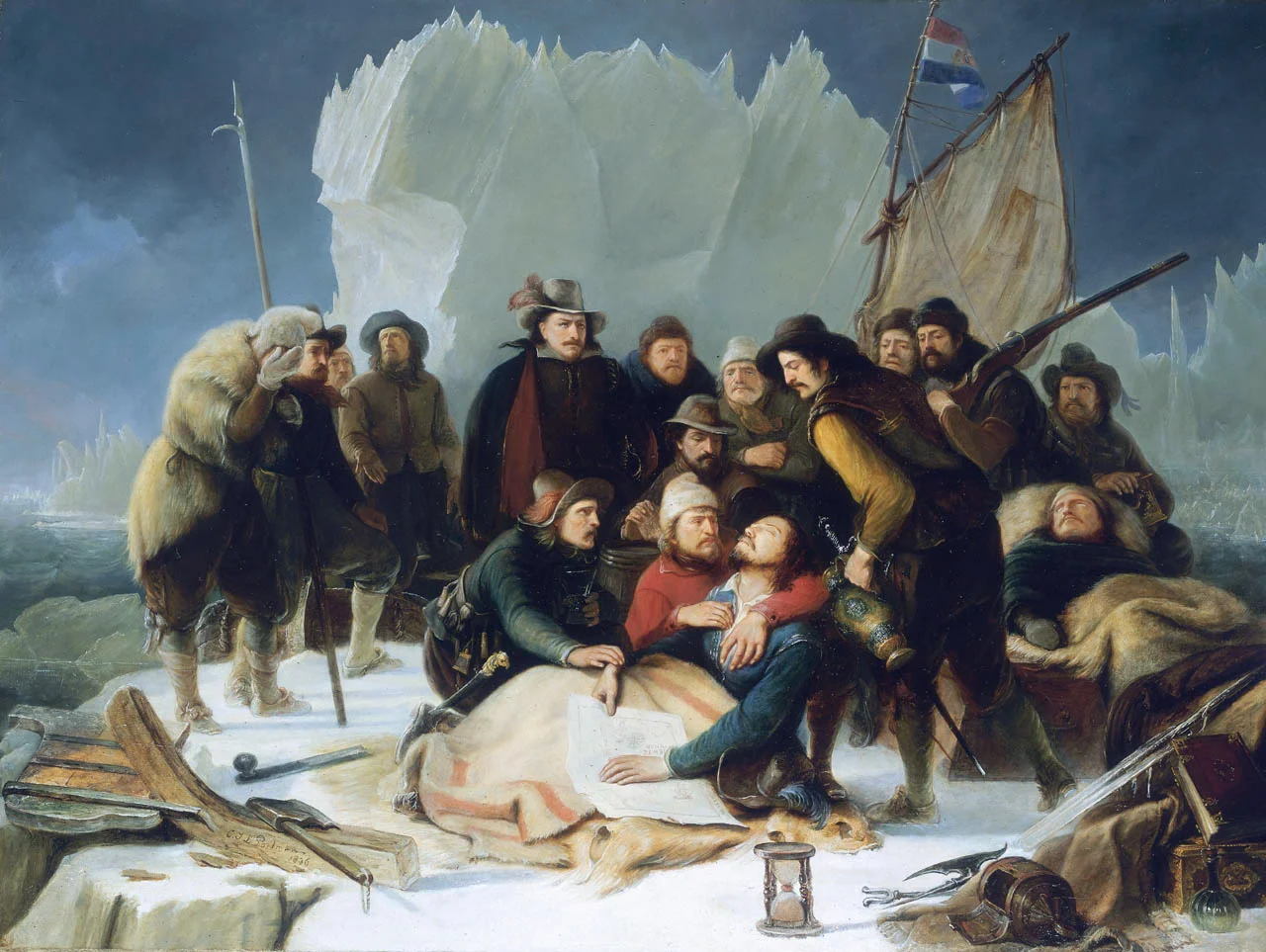
In late June 1597, one of the bravest navigators in maritime history lay dying upon an ice floe in the frozen Arctic Ocean. The Dutch mariner and cartographer Willem Barentsz (Willem Barentszoon, c. 1550–1597) had just completed one of the most astonishing endurance feats in polar history: surviving an entire winter stranded in a makeshift cabin on Novaya Zemlya in the high Arctic.
Although Barentsz never unlocked the elusive Northeast Passage to China and the East Indies, his voyages permanently reshaped world cartography. During his final voyage in 1596, he made two epochal discoveries: Bear Island (Bjørnøya) and the jagged, snowbound archipelago known today as Svalbard.
Furthermore, Barentsz’s fateful expeditions marked the dawn of more than two centuries of profound maritime, commercial, and human fellowship between Norway and the Dutch Republic.
The Quest for the Northeast Passage (1594–1597)
Toward the close of the 16th century, the fledgling Dutch Republic was entering its Golden Age as an energetic global trading power. Yet the lucrative maritime lanes to the wealth of East Asia — its silks, porcelain, and precious spices — were heavily contested by the naval empires of Spain and Portugal, who guarded the southern routes around Africa and South America with iron fists.
Dutch scholars, spearheaded by the renowned clergyman, cartographer, and astronomer Petrus Plancius, championed a bold thesis: Could an open Northeast Passage lie through the icy waters north of Scandinavia and Siberia? Plancius argued that the continuous summer midnight sun would keep the open Arctic waters free of impassable sea ice.
Willem Barentsz, born on the West Frisian island of Terschelling, had already distinguished himself as an accomplished Mediterranean cartographer and Amsterdam citizen when he was selected to spearhead Dutch exploration of the frozen north.
Following two preliminary expeditions in 1594 and 1595, which surveyed the coast of Novaya Zemlya and penetrated the Kara Sea before being rebuffed by pack ice, the Amsterdam city council mounted a third expedition in May 1596. Two ships were commissioned under joint command: Jacob van Heemskerck (with Barentsz serving as chief pilot and scientific navigator) and Jan Cornelisz Rijp.
1596: The Discovery of Bear Island and Spitsbergen
Rijp forcefully advocated steering a course farther west into open water to escape the coastal ice traps that had thwarted earlier voyages. This bold westerly heading resulted in two landmark geographical breakthroughs:
- Bear Island (Bjørnøya, 8 June 1596): The fleet made landfall on an isolated, fog-shrouded cliff island at 74° North. After a perilous two-hour struggle with a massive swimming polar bear, the island was christened Beeren Eylandt — Bear Island.
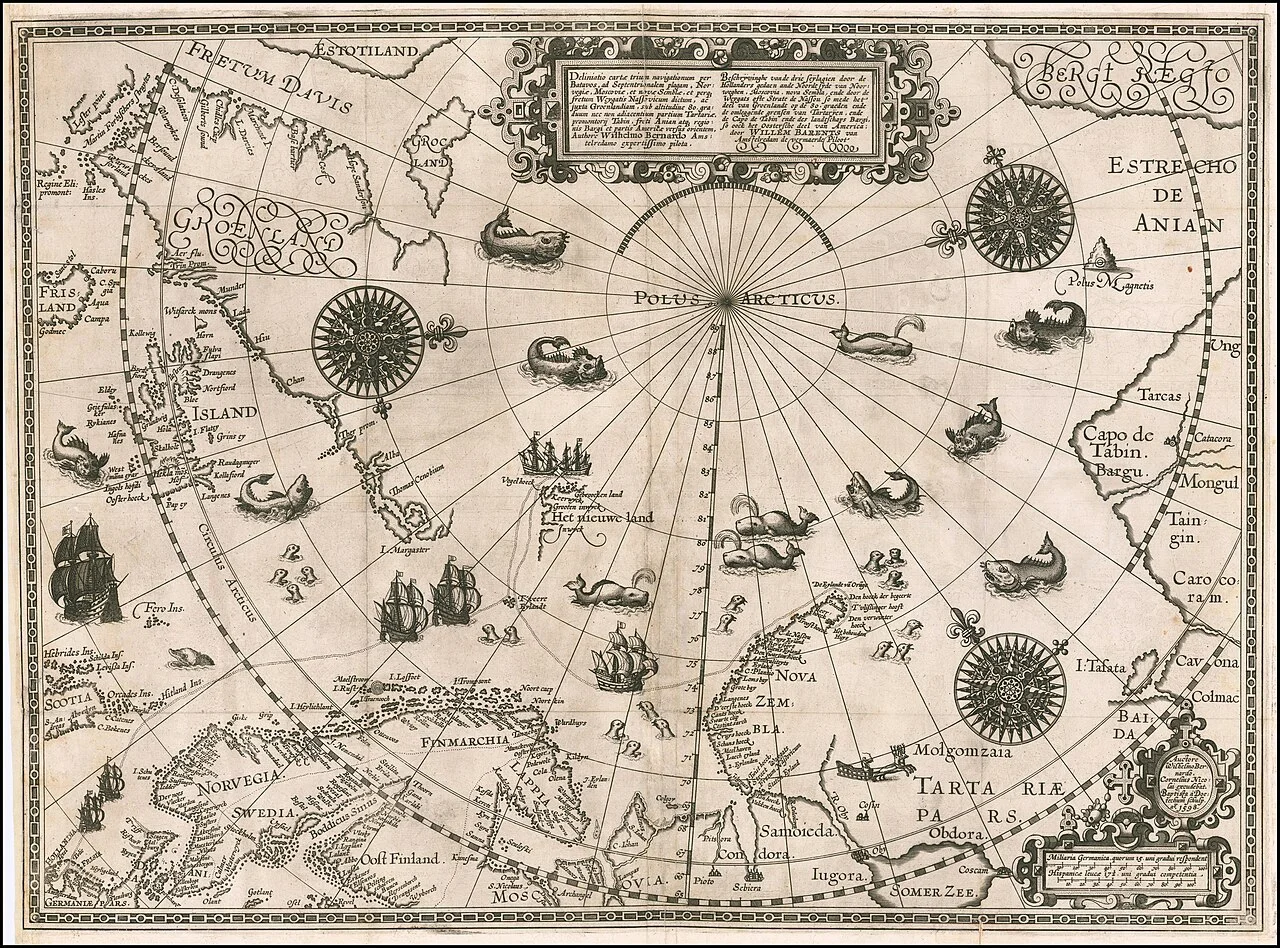
- Svalbard / Spitsbergen (17 June 1596): Pushing straight northward to nearly 80° N, the mariners beheld a dramatic spectacle: razor-sharp, snow-covered mountain crags rising sheer from the Arctic waters. Barentsz named the territory Spitsbergen (“pointed mountains”) and entered it onto his charts as Het Nieuwe Land (“The New Land”), initially suspecting it might be connected to Greenland.
After surveying parts of northwestern Spitsbergen and concluding that the true passage to China must lie further eastward, Barentsz and Heemskerck parted company with Rijp. They set sail east toward Novaya Zemlya — an audacious decision that would seal their fate.
«Het Behouden Huys»: The Epic Winter on Novaya Zemlya
In August 1596, as the brief Arctic summer abruptly died, massive pack ice crushed and trapped their wooden ship off the northeastern cape of Novaya Zemlya (76° N). Barentsz and his 16 companions realized that escape by sea was impossible; they were marooned for the winter.
To survive, the crew gathered driftwood from the desolate shores and dismantled deck cabins from their stranded vessel to construct a shelter. They christened it Het Behouden Huys (“The Safe House” or “The Preserved House”).
What followed was one of polar history’s most thoroughly recorded survival sagas, meticulously documented day by day in the journal of Gerrit de Veer:
- Unimaginable Cold: The temperature plunged so low that clock mechanisms froze solid, beer casks shattered as their contents turned to stone, and the men’s breath froze into thick sheets of rime frost on their bunk boards.
- Predators in the Dark: Polar bears ceaselessly stalked the cabin, scaling the snowdrift-covered roof and attempting to enter through the smoke-hole.
- Scurvy and the Polar Night: Trapped through months of unbroken winter darkness, the men maintained morale through strict discipline, group prayers, celebrating the Epiphany, and hunting Arctic foxes to ward off fatal scurvy. Two men succumbed to illness during the winter.
When the ice failed to release their vessel in June 1597, the emaciated survivors embarked on a desperate escape in two small, open rowboats, rowing southward along the storm-battered coasts.
On 20 June 1597, Willem Barentsz, weakened by illness and exposure, died on the sea ice while clutching his beloved Arctic charts. He was committed to the polar deep that had claimed his heart.
Against all odds, the surviving crew rowed more than 2,500 kilometres (1,600 miles) across ice-choked waters to the Kola Peninsula. There, in a miraculous twist of fate, they were rescued by a Dutch merchantman skippered by their former expedition comrade, Jan Cornelisz Rijp!
The Norwegian Connection: Elling Carlsen’s Discovery (1871)
For nearly three centuries, the remains of Het Behouden Huys stood silent and frozen in time on the lonely northeastern shores of Novaya Zemlya.
In September 1871, the legendary Norwegian Arctic sealing captain Elling Carlsen of Tromsø, commanding the sloop Ino, circumnavigated Novaya Zemlya and stepped ashore at the historic site. Carlsen discovered the wooden cabin remarkably preserved by Arctic permafrost.
Inside the ruins, Carlsen unearthed books, navigational instruments, copper cooking pots, tools, and a mechanical clock untouched since 1597. These extraordinary relics were transported to Norway and subsequently transferred to the Dutch government; today, they form a premier permanent exhibition at the Rijksmuseum in Amsterdam.
Norway’s Historical Ties to the Netherlands: «Hollendertiden»
Willem Barentsz’s voyages were not an isolated Arctic episode; they formed part of a vast maritime network that linked Norway and the Netherlands in deep economic and human synergy throughout the 16th, 17th, and 18th centuries.
1. Amsterdam Built on Norwegian Timber
The extraordinary rise of the Dutch Golden Age demanded colossal quantities of structural timber for shipbuilding, canal construction, dykes, and urban foundations. Bereft of native woodlands, the Dutch looked north to Norway.
In Norwegian historiography, the era from roughly 1550 to 1750 is known as Hollendertiden (“The Dutch Era”). Millions of pine and spruce logs were felled across Agder, Telemark, Vestfold, and Østerdalen, and ferried south aboard Dutch fluyt ships. Substantial portions of Amsterdam rest literally upon thousands of Norwegian timber piles driven deep into the marshy soil — including the iconic Royal Palace on Dam Square (Paleis op de Dam), supported by over 13,600 Norwegian pine piles!
2. The Svalbard Whaling Boom and Smeerenburg
Barentsz’s vivid reports of plentiful whales and walruses triggered a gold rush in northern waters. Between 1614 and the 1660s, the Dutch Northern Company (Noordsche Compagnie) dominated Arctic whaling. On Amsterdam Island in northwestern Svalbard, they founded Smeerenburg (“Blubber Town”), where up to a thousand Dutch blubber-boilers and whalers processed whale oil every summer to light the lanterns and lubricate the machinery of Europe.
3. Norwegian Emigration to the Dutch Republic
Long before the great 19th-century migration to North America, the Netherlands was the ultimate destination for Norwegians seeking fortune. Between 1600 and 1750, tens of thousands of young Norwegians — mariners, craftsmen, and domestic laborers — migrated to Amsterdam. Norwegian sailors constituted a massive contingent within the Dutch East India Company (VOC) and the Dutch Admiralty.
Among them was the renowned naval hero Cort Adeler (born Kurt Sivertsen in Brevik, Norway), who trained under Dutch Admiral Maarten Tromp, won international acclaim in Dutch and Venetian naval service, and eventually returned north to modernize the Royal Dano-Norwegian Navy.
4. A Shared Maritime Language
Centuries of seafaring collaboration permanently enriched the Norwegian tongue. Almost the entirety of Norway’s traditional nautical vocabulary consists of direct Dutch loanwords:
- Matros (Dutch: matroos, able seaman)
- Kahytt (kajuit, cabin)
- Baugspryd (boegspriet, bowsprit)
- Dørk (dolk / vloer, deck floor)
- Rederi (rederij, shipping company)
- Fender, spant, klyver, trosse, and koffardi.
Barentsz’s Enduring Legacy
Willem Barentsz never reached the spice markets of Cathay, but his fearless seamanship, meticulous observations, and brilliant cartography unmasked the polar north to European civilization.
His 1598 polar map swept away medieval superstitions of magnetic mountains and four polar continents, proving that the Arctic Ocean was an expansive navigable sea bordered by continental landmasses.
Today, his name is immortalized across the Arctic: in the vast waters of the Barents Sea, on Barentsøya (Barents Island), and in the mining town of Barentsburg on Svalbard. Willem Barentsz remains the enduring human symbol of the historic ties connecting the Netherlands with the wild, majestic coasts of Norway.
Questions about Willem Barentsz and the Discovery of Svalbard: Arctic Heroism and Norway’s Ties to the Netherlands?
Tell us what you are looking for or when you wish to arrive. We are happy to advise and assist.
Write to Ophuz